MiroTalk C2C
A focused, self-hosted camera-to-camera experience for two participants. C2C suits support, consultations, tutoring, telehealth workflows, and applications that need an embeddable one-to-one call.
Try the live demo Self-host MiroTalk C2C View product page
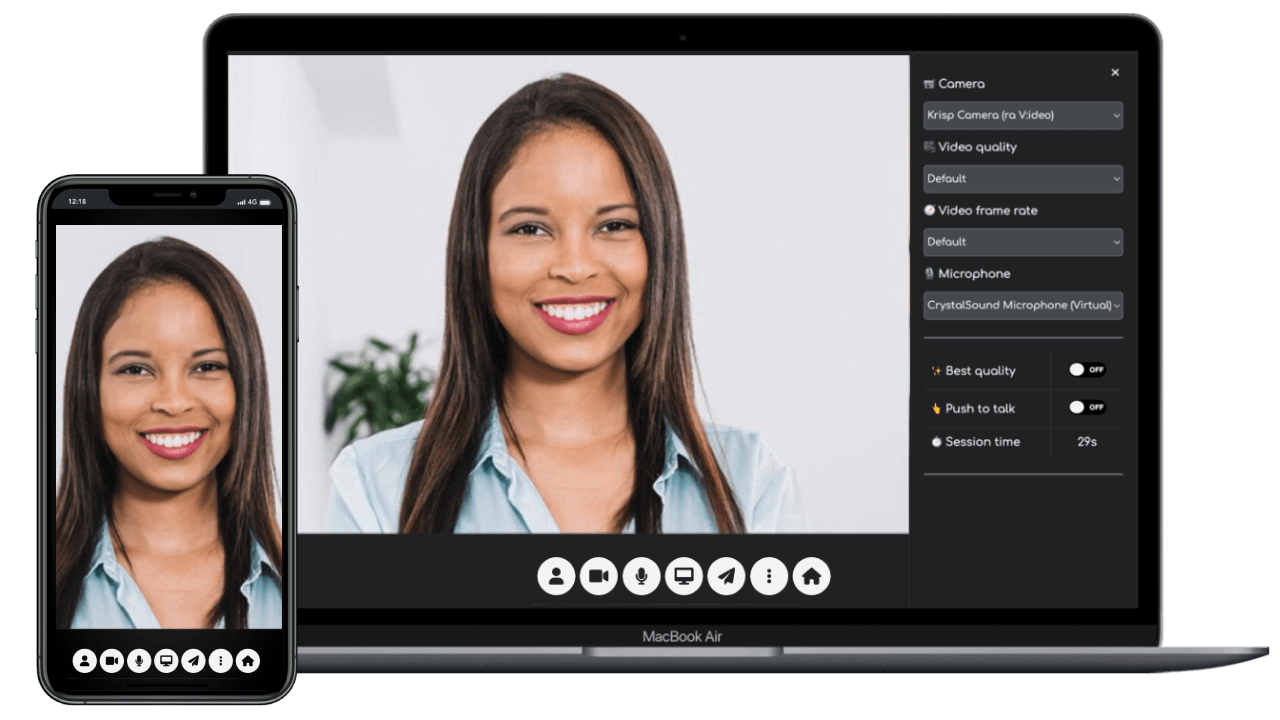
How C2C works
The two participants establish an encrypted WebRTC media path directly when possible. Signaling coordinates the call, and TURN can relay encrypted packets when firewalls or NAT prevent a direct connection.
| Concern | C2C behavior |
|---|---|
| Participation | Exactly two participants per call |
| Media | Direct peer-to-peer when possible |
| Network fallback | TURN relay when required |
| Server role | Signaling, room coordination, authentication, and optional relay |
| Primary trade-off | A compact one-to-one workflow rather than group meetings |
Compare product architectures Read about STUN and TURN
Call capabilities
- Webcam, microphone, and screen sharing
- Text chat, emoji, and file transfer
- Local recording and device controls
- Responsive browser interface
- Iframe embedding for existing applications
Build with C2C
| Goal | Documentation |
|---|---|
| Create or inspect calls programmatically | REST API |
| Embed a call | Iframe integration |
| Construct direct call links | Join options |
Self-host and operate
| Stage | Documentation |
|---|---|
| Install with Node.js, PM2, or Docker | Self-hosting guide |
| Configure application behavior | Configuration reference |
| Expose a local development instance | Ngrok guide |
Plan for restrictive networks
A production P2P service should provide TURN for participants who cannot connect directly. Relay use consumes server bandwidth even though the media remains encrypted in transit.
Licensing and support
Use the official licensing page as the source of truth for commercial requirements.
Compare licensing options View C2C commercial options Contact MiroTalk Enterprise